ES
ES  AR
AR  RU
RU  PT
PT 

Titanium oxide (TiO₂) has core applications in many fields due to its excellent physicochemical properties. As a top-grade white pigment, it is a key component in coatings, plastics, and inks. Nanoscale products, with their UV-blocking capabilities, are a core ingredient in transparent sunscreens. Their powerful photocatalytic properties are used in air purification, self-cleaning surfaces, and wastewater treatment. Furthermore, they are indispensable in dye-sensitized solar cells, food additives (E171), and UV-resistant materials.
The particle size distribution of titanium oxide is a key physical parameter that determines its final application performance, and its influence is multifaceted and profound.
1. Particle size distribution directly determines its optical properties. As a pigment, when its particle size is around 0.2-0.3 micrometers (close to half the wavelength of visible light), its ability to scatter light is strongest, thus achieving optimal hiding power and whiteness, which is the core of coatings and plastics applications. If the particle size is too small (such as nanoscale), it is transparent to visible light and can effectively block ultraviolet rays, which is the principle behind transparent sunscreens.
2. Particle size distribution affects dispersibility and processability. A narrow and uniform particle size distribution makes it easier to disperse stably in resins or solvents, preventing agglomeration and sedimentation, thus ensuring product gloss, uniformity, and long-term stability. Conversely, an excessively wide particle size distribution or the presence of coarse particles can lead to a rough coating surface, scratches, or sedimentation.
3. Surface activity and functionality are strongly dependent on particle size. The smaller the particle size, the larger the specific surface area, and the higher its photocatalytic activity (such as decomposing pollutants and antibacterial activity) and chemical reactivity. However, this also means that it is more prone to aggregation and deactivation, and there are potential impacts on the environment and health, requiring surface modification.
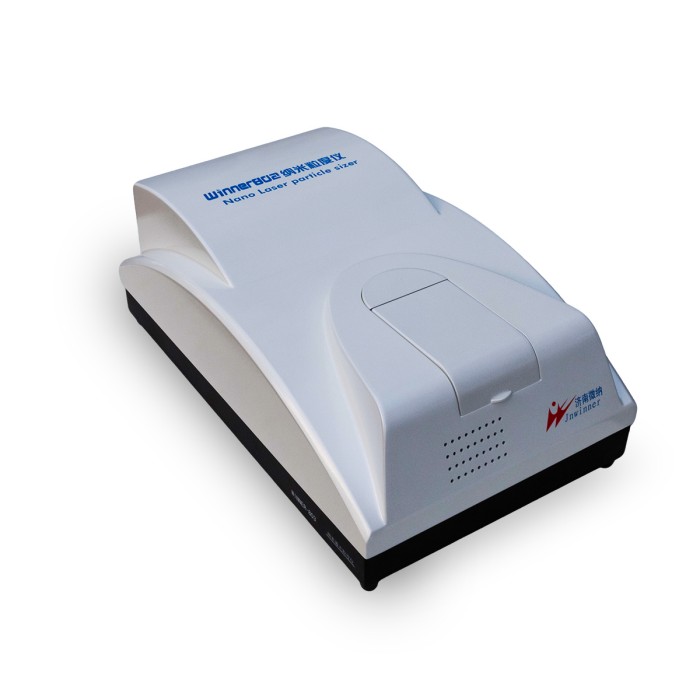
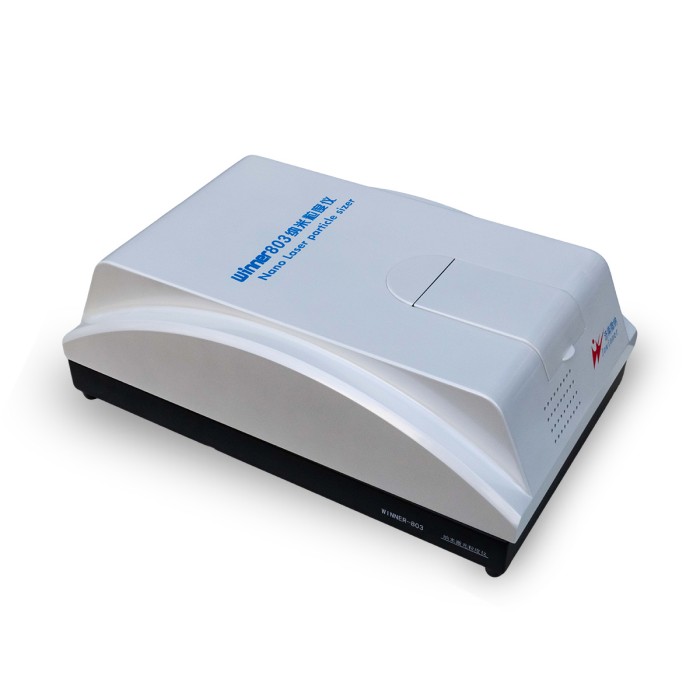
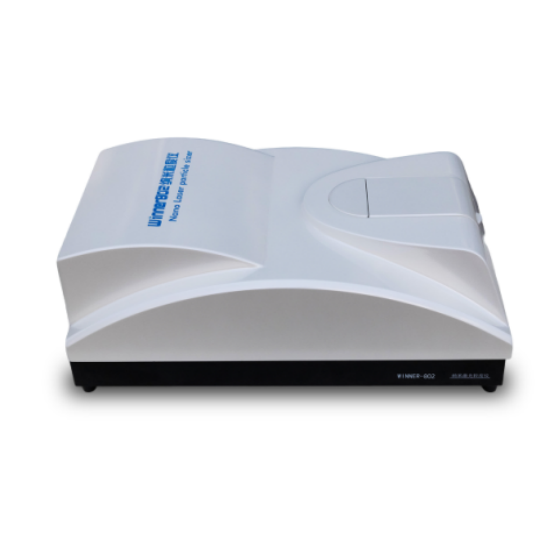
This time, Winner802 is recommended to test the particle size distribution of titanium oxide. Winner802 Photon Correlation DLS Nano particle Size Analyzer, employs the principle of dynamic light scattering and photon correlation spectroscopy, with a testing range of 1-10000nm. With advantages such as high sensitivity, strong resistance to interference, and reliable temperature control system, it is a strong choice for testing the particle size distribution of samples such as cells, bacteria, pharmaceuticals, additives, emulsions, coatings, and dyes.
Measuring instrument information is as follows:
The video of measuring particles is as follows:
Copyright © Jinan Winner Particle Instrument Stock Co., Ltd. All Rights Reserved | sitemap